University of Washington
Section 5: Procedures & Stacks
Stacks in memory and stack operations
The stack used to keep track of procedure calls
Return addresses and return values
Stack-based languages
The Linux stack frame
Passing arguments on the stack
Allocating local variables on the stack
Register-saving conventions
Procedures and stacks on x64 architecture
Procedure Calls
University of Washington
Procedure Call Overview
Procedure Calls
Caller
Callee
Callee
must know where to find args
Callee
must know where to find “return address”
Caller
must know where to find return val
Caller
and
Callee
run on same CPU
→
use the same registers
Caller
might need to save registers that
Callee
might use
Callee
might need to save registers that
Caller
has used
…
<set up args>
call
<clean up args>
<find return val>
…
<create local vars>
…
<set up return val>
<destroy local vars>
return
University of Washington
Procedure Call Overview
Procedure Calls
Caller
Callee
…
<save regs>
<set up args>
call
<clean up args>
<restore regs>
<find return val>
…
<save regs>
<create local vars>
…
<set up return val>
<destroy local vars>
<restore regs>
return
The convention of where to leave/find things is called the
procedure call linkage
Details vary between systems
We will see the convention for IA32/Linux in detail
What could happen if our program didn’t follow these conventions?

University of Washington
Procedure Control Flow
Use stack to support procedure call and return
Procedure call:
call label
Push return address on stack
Jump to label
Procedure Calls
University of Washington
Procedure Control Flow
Use stack to support procedure call and return
Procedure call:
call label
Push return address on stack
Jump to label
Return address:
Address of instruction after call
Example from disassembly:
804854e: e8 3d 06 00 00 call 8048b90 <main>
8048553: 50 pushl %eax
Return address = 0x8048553
Procedure return:
ret
Pop return address from stack
Jump to address
Procedure Calls
University of Washington
%esp
%eip 0x804854e
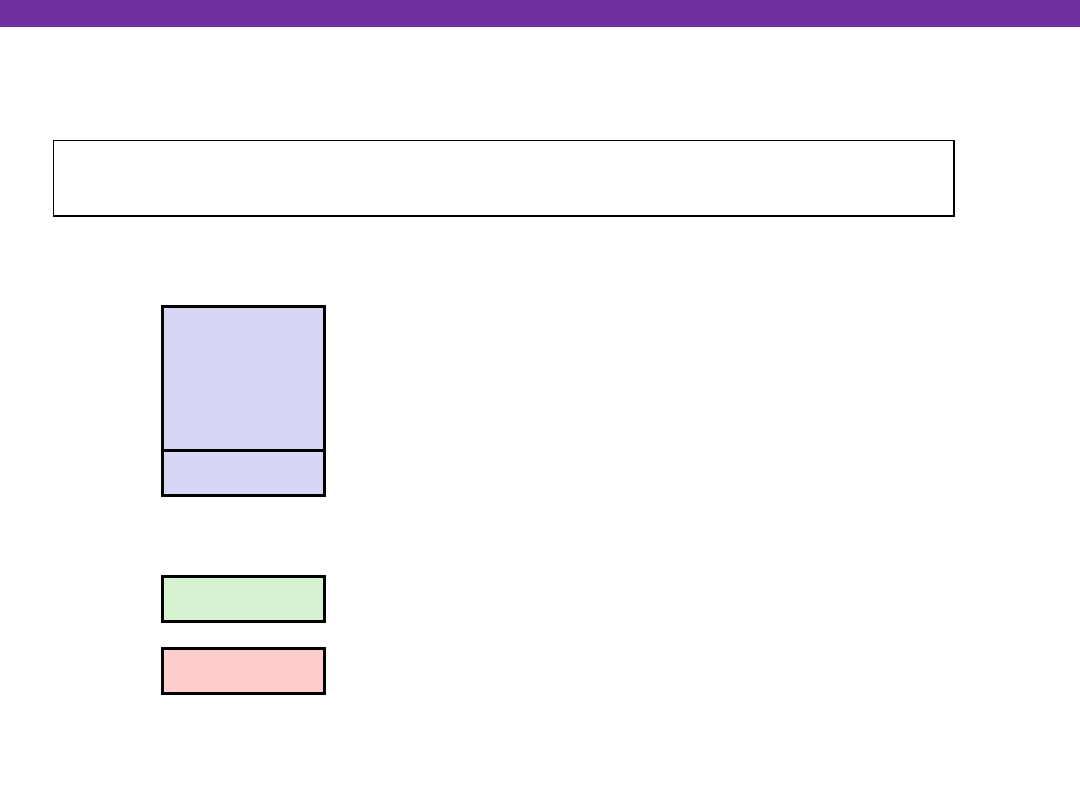
Procedure Call Example
0x108
0x10c
0x110
123
0x108
804854e:
e8 3d 06 00 00
call 8048b90 <main>
8048553:
50
pushl %eax
%eip: program counter
call 8048b90
Procedure Calls
University of Washington
%esp
%eip
%esp
%eip 0x804854e
0x108
0x108
0x10c
0x110
0x104
0x804854e
123
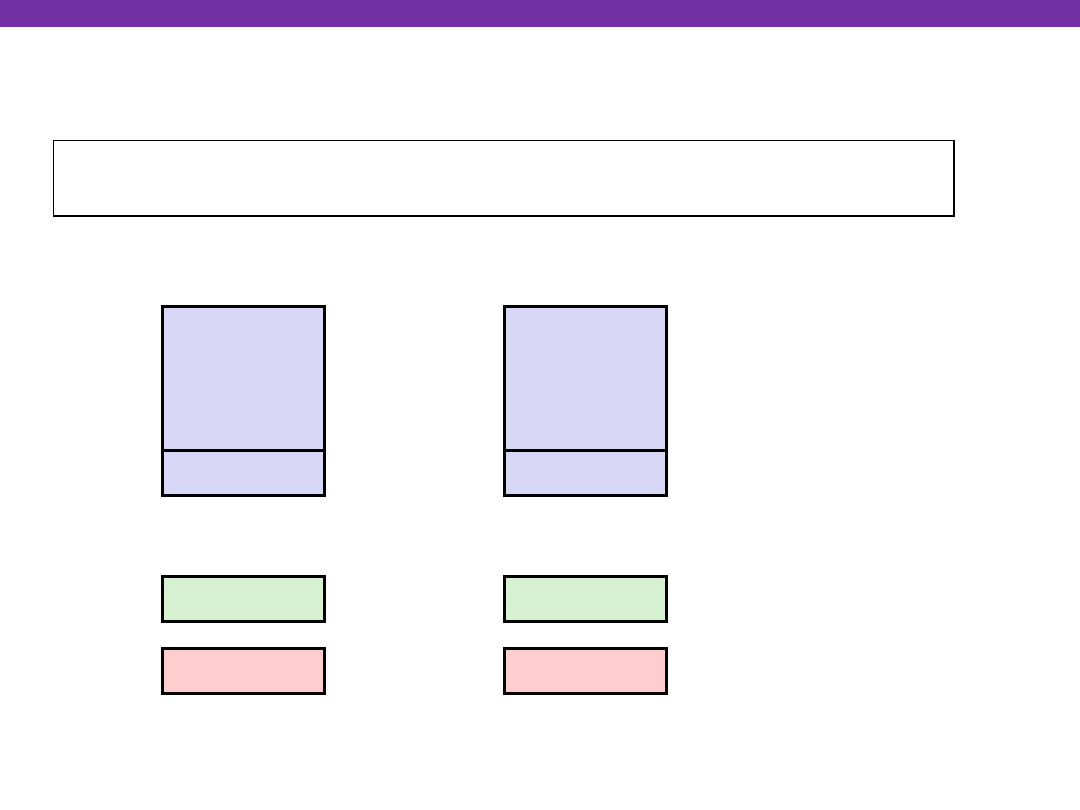
Procedure Call Example
0x108
0x10c
0x110
123
0x108
804854e:
e8 3d 06 00 00
call 8048b90 <main>
8048553:
50
pushl %eax
%eip: program counter
call 8048b90
Procedure Calls
University of Washington
%esp
%eip
%esp
%eip 0x804854e
0x108
0x108
0x10c
0x110
0x104
0x804854e
123
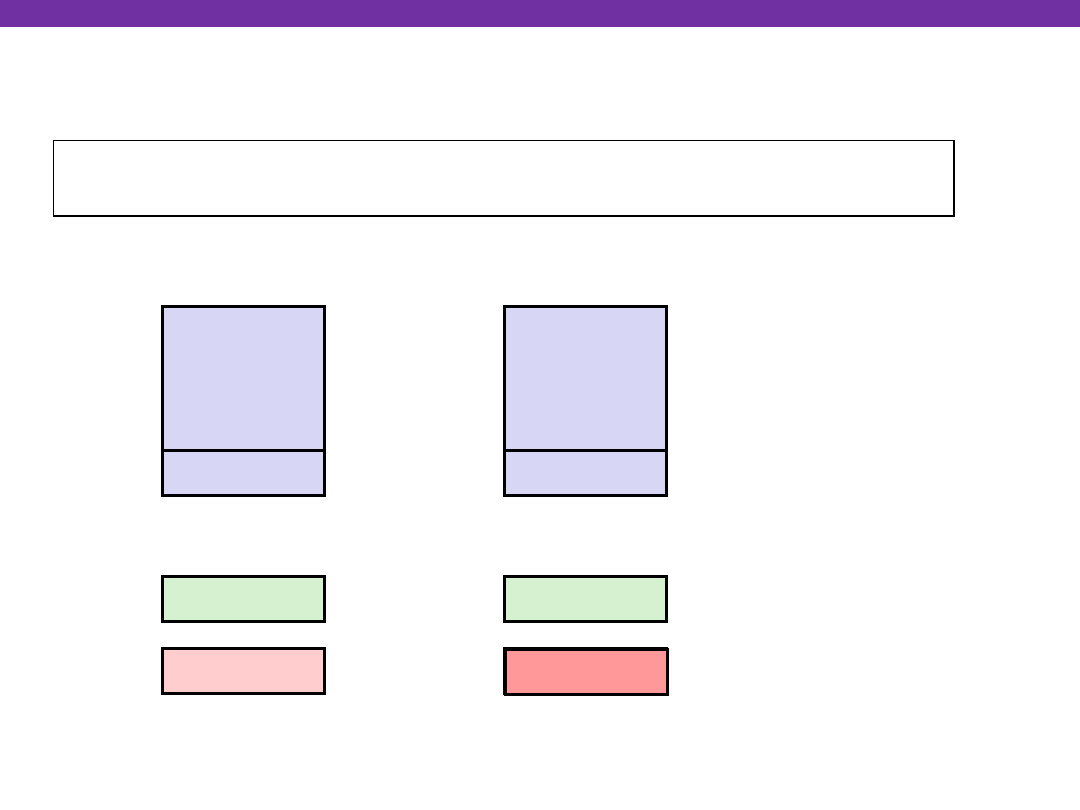
Procedure Call Example
0x108
0x10c
0x110
123
0x108
804854e:
e8 3d 06 00 00
call 8048b90 <main>
8048553:
50
pushl %eax
%eip: program counter
call 8048b90
Procedure Calls
0x8048553
University of Washington
%esp
%eip
%esp
%eip 0x804854e
0x108
0x108
0x10c
0x110
0x104
0x804854e
0x8048553
123
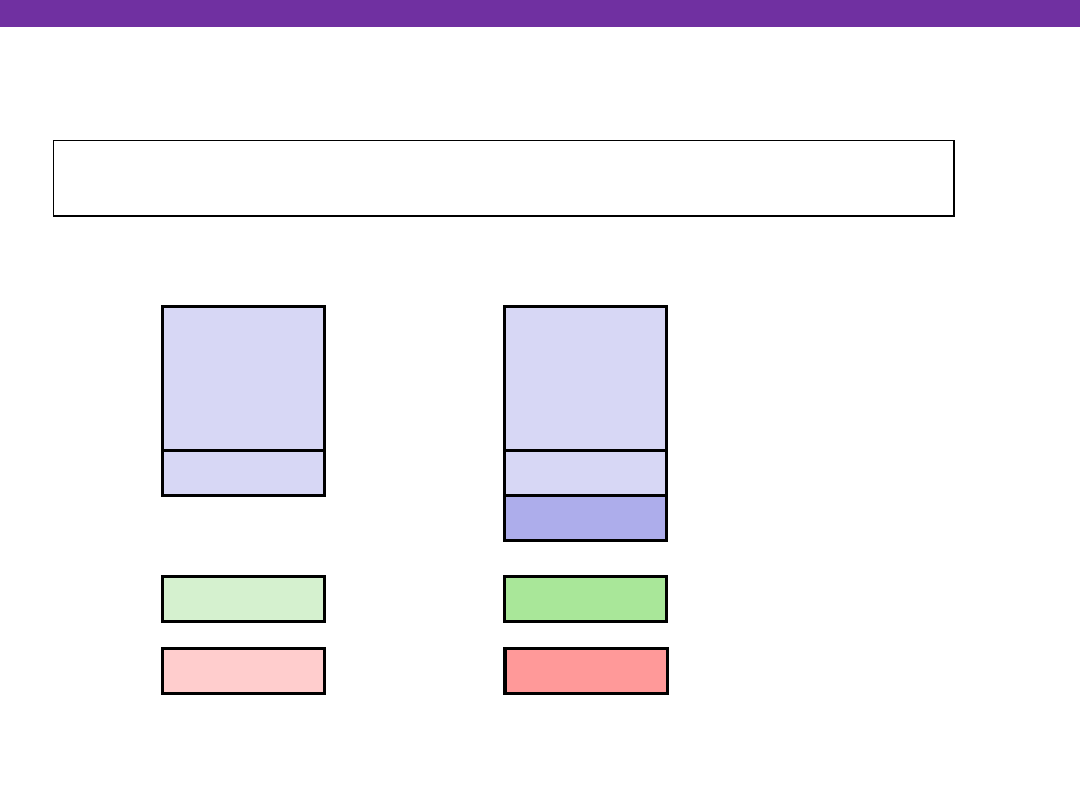
Procedure Call Example
0x108
0x10c
0x110
123
0x108
call 8048b90
804854e:
e8 3d 06 00 00
call 8048b90 <main>
8048553:
50
pushl %eax
0x8048553
0x104
%eip: program counter
Procedure Calls
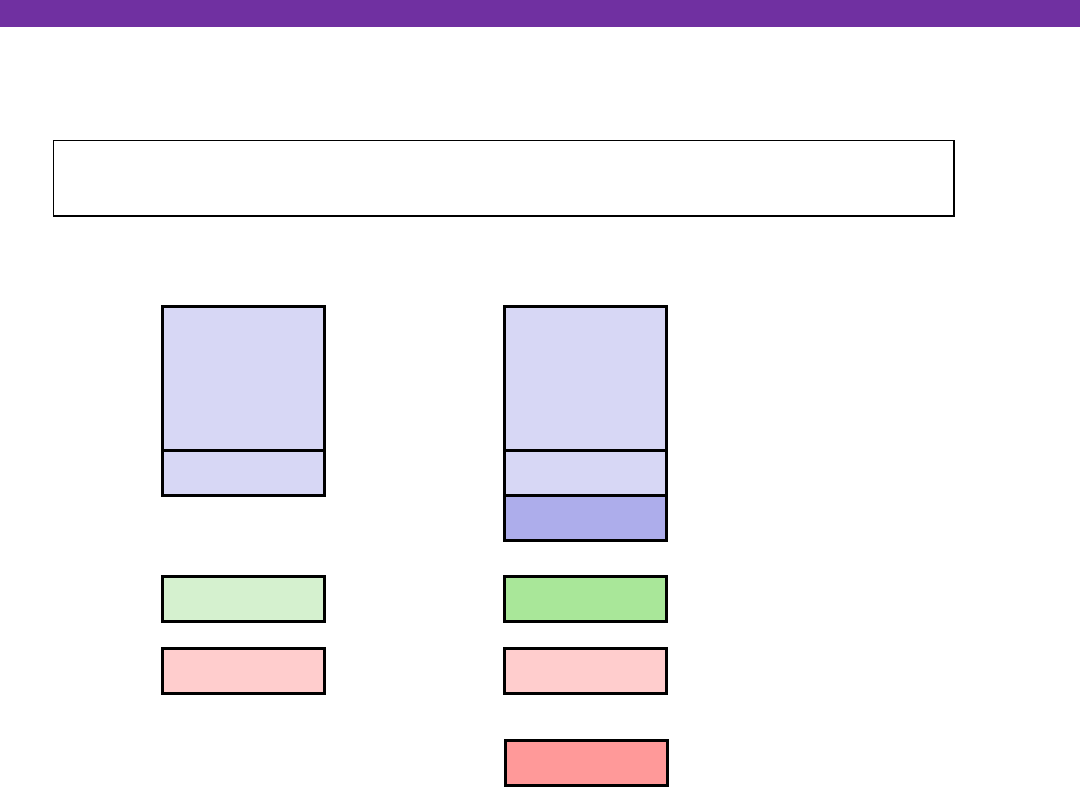
University of Washington
%esp
%eip
%esp
%eip 0x8048553
0x108
0x108
0x10c
0x110
0x104
0x804854e
0x8048553
123
Procedure Call Example
0x108
0x10c
0x110
123
0x108
call 8048b90
804854e:
e8 3d 06 00 00
call 8048b90 <main>
8048553:
50
pushl %eax
0x8048b90
0x104
%eip: program counter
+ 0x000063d
Procedure Calls
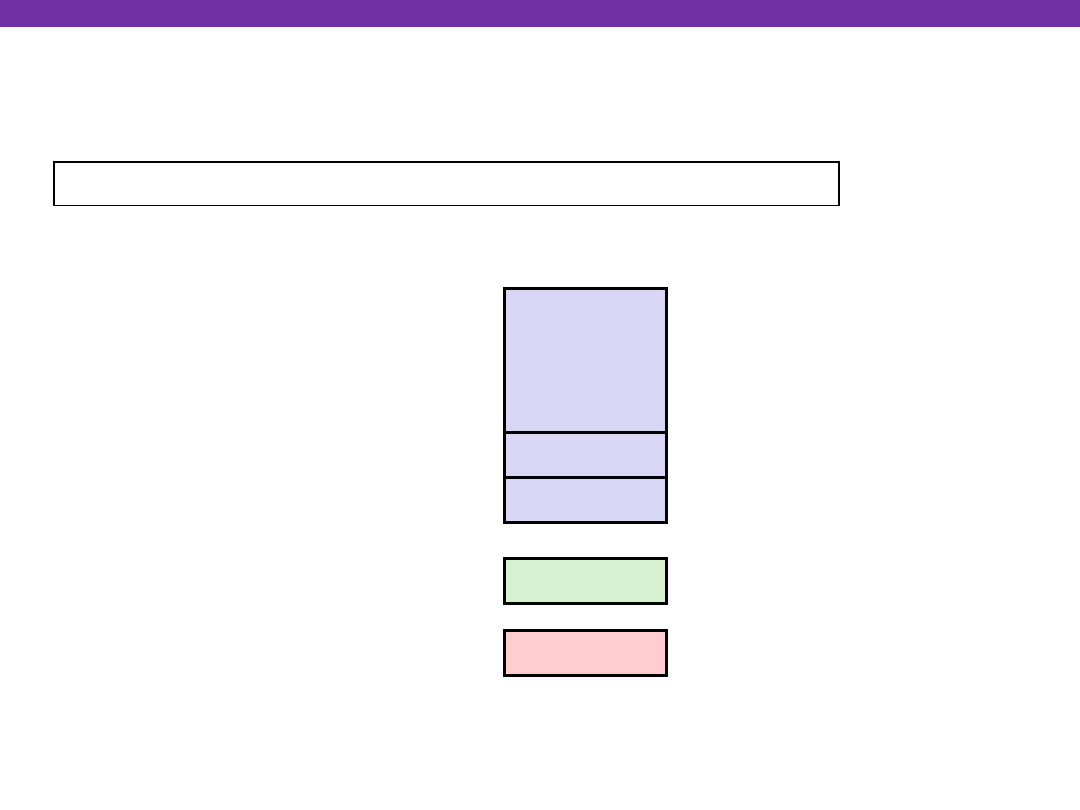
University of Washington
%esp
%eip
0x104
0x8048591
0x104
0x108
0x10c
0x110
0x8048553
123
Procedure Return Example
8048591:
c3
ret
%eip: program counter
ret
Procedure Calls
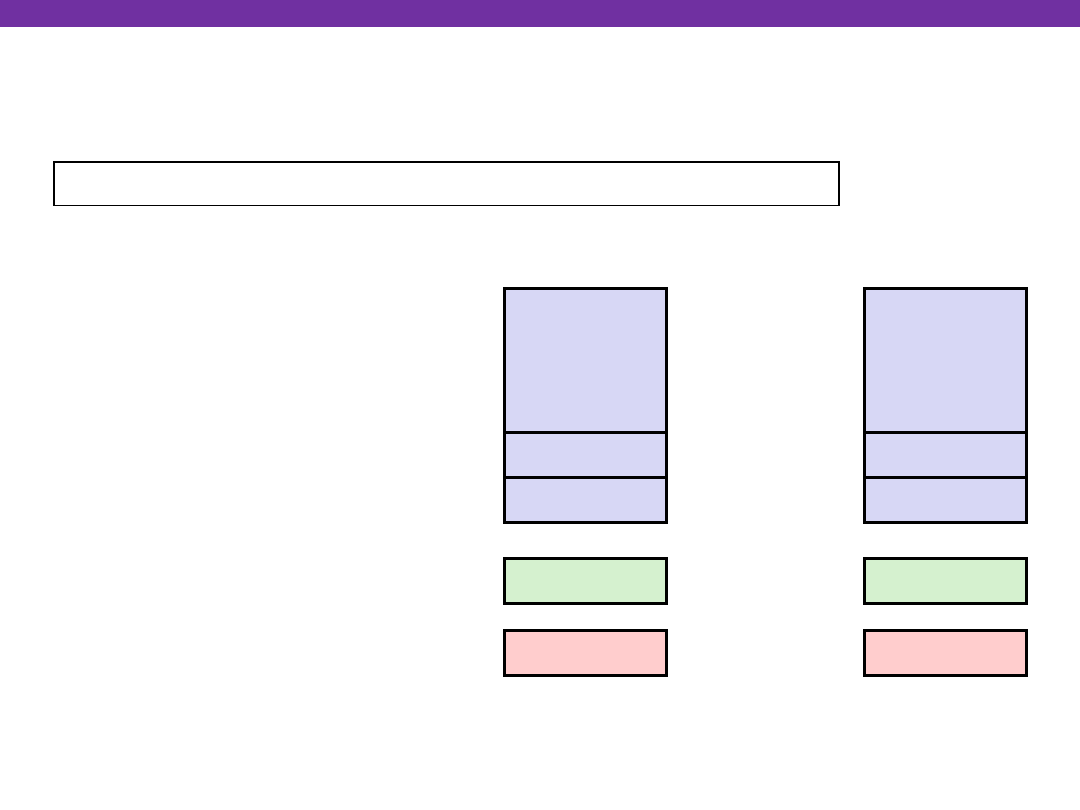
University of Washington
%esp
%eip
0x104
%esp
%eip 0x8048591
0x8048591
0x104
0x104
0x108
0x10c
0x110
0x8048553
123
Procedure Return Example
0x108
0x10c
0x110
123
8048591:
c3
ret
0x8048553
%eip: program counter
ret
Procedure Calls
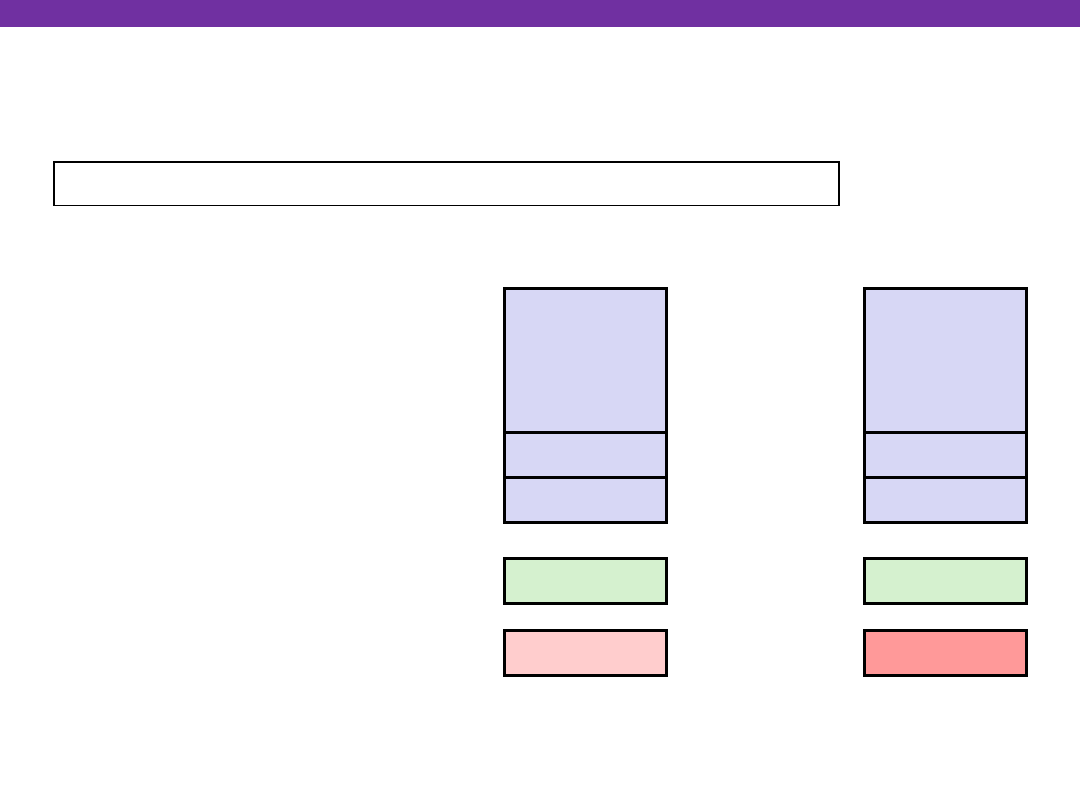
University of Washington
%esp
%eip
0x104
%esp
%eip 0x8048591
0x8048591
0x104
0x104
0x108
0x10c
0x110
0x8048553
123
Procedure Return Example
0x108
0x10c
0x110
123
ret
8048591:
c3
ret
0x8048553
0x8048553
%eip: program counter
Procedure Calls
University of Washington
%esp
%eip
0x104
%esp
%eip 0x8048591
0x8048591
0x104
0x104
0x108
0x10c
0x110
0x8048553
123
Procedure Return Example
0x108
0x10c
0x110
123
ret
8048591:
c3
ret
0x108
0x8048553
0x8048553
%eip: program counter
Procedure Calls

University of Washington
Return Values
By convention, values returned by procedures are placed in
the %eax register
Choice of %eax is arbitrary, could have easily been a different register
Caller must make sure to save that register before calling a
callee that returns a value
Part of register-saving convention we’ll see later
Callee placed return value (any type that can fit in 4 bytes –
integer, float, pointer, etc.) into the %eax register
For return values greater than 4 bytes, best to return a pointer to them
Upon return, caller finds the return value in the %eax register
Procedure Calls
Wyszukiwarka
Podobne podstrony:
02 Procedure Calls and Returns
02 Procedura postępowania w razie wypadku
02 Procedura postępowania powypadkowego
Lab 02 UNIX files and directories management
#0796 – Setting Up Conference Calls and Videoconferences
Diana Palmer Whitehall Saga 02 The Cowboy And The Lady
Death and return of the author criticism and subjectivity in barthes foucault and derrida
02 6 Minute Mosquitos and teenagers
Joel Rosenberg 02 The Sword And The Chain
Ian Fleming Bond 02 (1954) Live And Let Die
37 Laura Kinsale Victoria Hearts 02 The Shadow And The Star
Scarlet Hyacinth The S E X Factor 02 The Wolf and the Raven
The Death And Return Of The Author Barthes, Foucault Derrida
A E Maxwell Fiddler 02 The Frog and the Scorpion (v1 5)
Asimov, Isaac Lucky Starr 02 Lucky Starr and the Pirates of the Asteroids UC
Patricia Gaffney [Wyckerley 02] To Have and To Hold
Cooper, Susan [Boggart 02] The Boggart and the Monster [rtf]
więcej podobnych podstron