Bleaching Water Stains from Furniture
OVERVIEW
Introduction
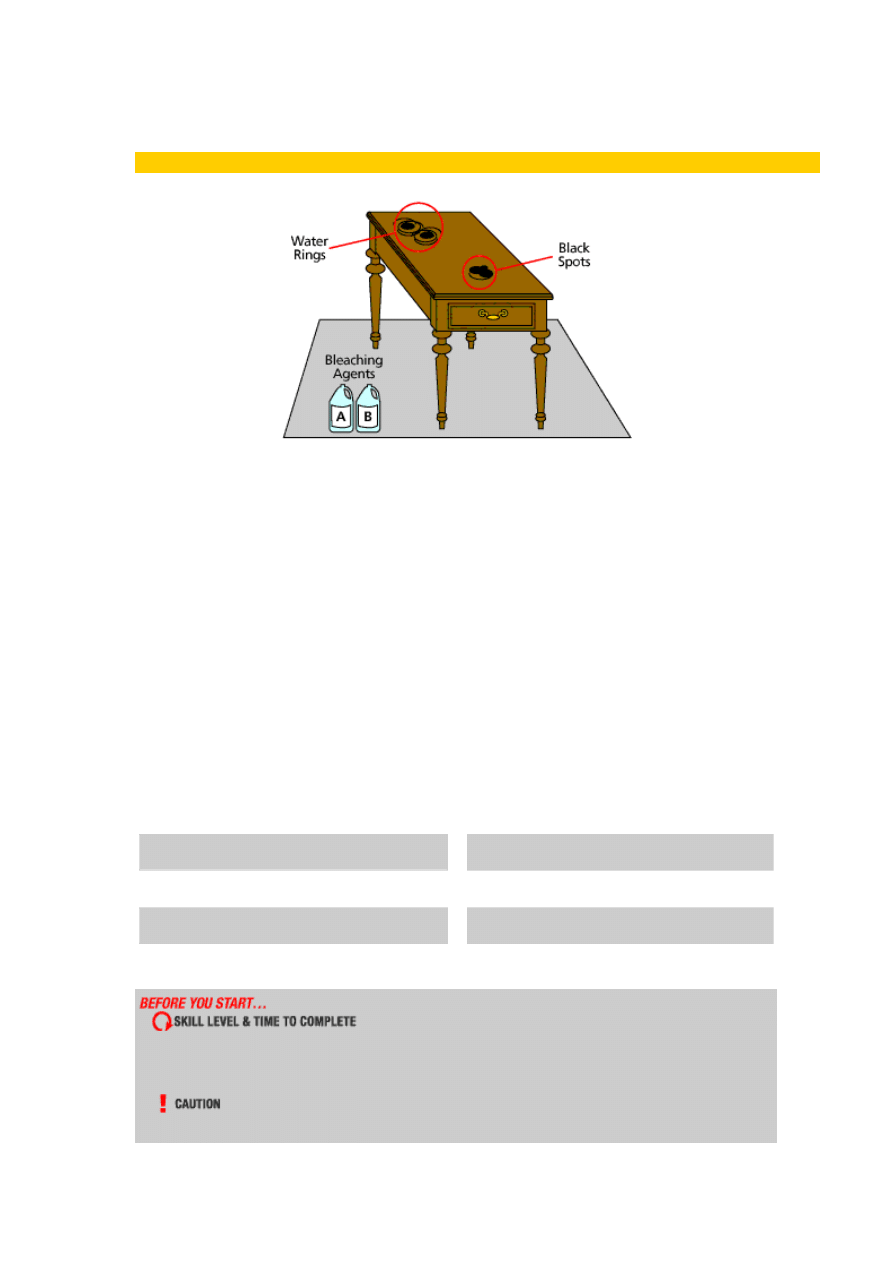
When restoring older wood furniture you will probably encounter dark rings and black spots,
which are caused by water stains. Oxalic acid is a moderate bleach that will remove these
stains even if they have penetrated the wood surface. Oxalic acid will also remove finish stain
applied previously and lighten the wood for a fresh new look.
Restoring wood furniture takes time and patience, but the results of your labor can be enjoyed
for years, even generations. The restoration process usually involves stripping off old finishes,
bleaching, staining and then varnishing.
Once you have stripped the old varnish and paint from a piece of furniture (see tutorial on
chemically stripping wood), you will most likely encounter stains in the wood surface that should
be removed before applying a new finish. Bleaching is a good technique for getting out these
stains. However, different types of stains require different bleaching techniques. Choose the
tutorial that best addresses your needs.
Type of Stain
Tutorial
Ink stains, stains caused by chemical
refinishers
Bleaching furniture with mild bleach
To lighten wood and remove old stain
Bleaching furniture with two-part hydrogen
peroxide
Dark rings and black spots, usually caused by
water
Bleaching furniture with oxalic acid (this
tutorial)
•
Beginner - 2-1/2 hours
•
Intermediate - 2 hours
•
Advanced - 1-1/2 hours
Plan quick access to water for rinsing bleach spills or splatters. Wear safety goggles, and if your
skin or eyes are exposed to the oxalic acid, immediately rinse thoroughly. Seek medical attention if the acid
does contact your eyes.
Use a well-ventilated work area; do not breathe fumes from oxalic acid.
Don’t use a metal container or utensils to mix or store oxalic acid.
Don’t breathe dust from sanding wood.
Dispose of unused mixture, used rags, paint brushes and sponges safely. Store unused oxalic
acid crystals properly.
Wear old clothes; oxalic acid does bleach.
STEPS
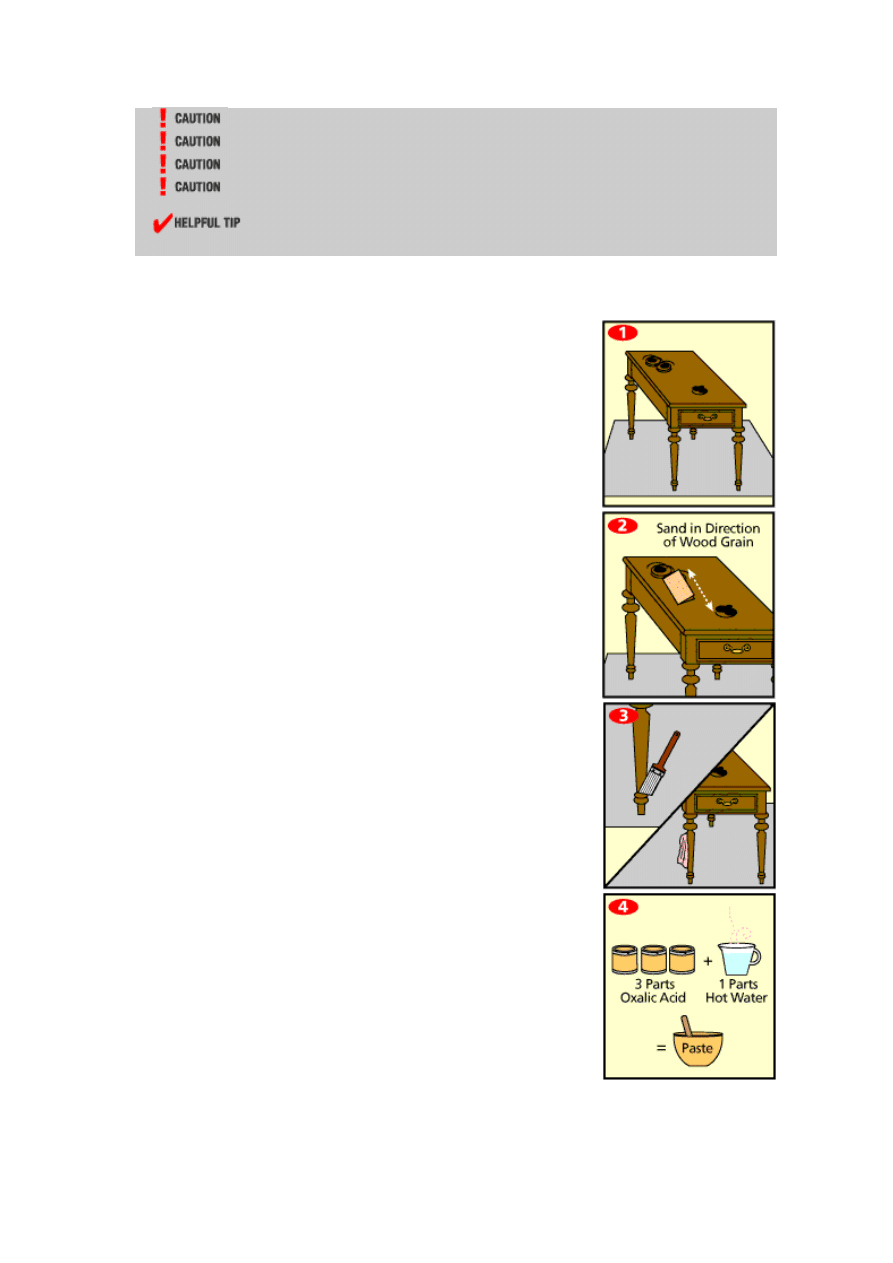
1.
Start with a piece of furniture that is bare wood. To remove an existing
finish, refer to the tutorial on stripping furniture. First, place your project
piece on a drop cloth for protection.
2.
Next, sand the wood thoroughly to remove oil and debris left from the
finish removing process. Be sure to sand in the direction of the wood
grain.
3.
Remove sanding dust by brushing with a clean, dry paintbrush, especially
in the joints and detail areas. Then rub a tack cloth over the entire surface
of your furniture.
4.
Next, make a small amount of wet paste, mixing hot water and oxalic acid
crystals. Use a mixture of three parts oxalic acid to one part hot water.
Add more water or more crystals as needed.
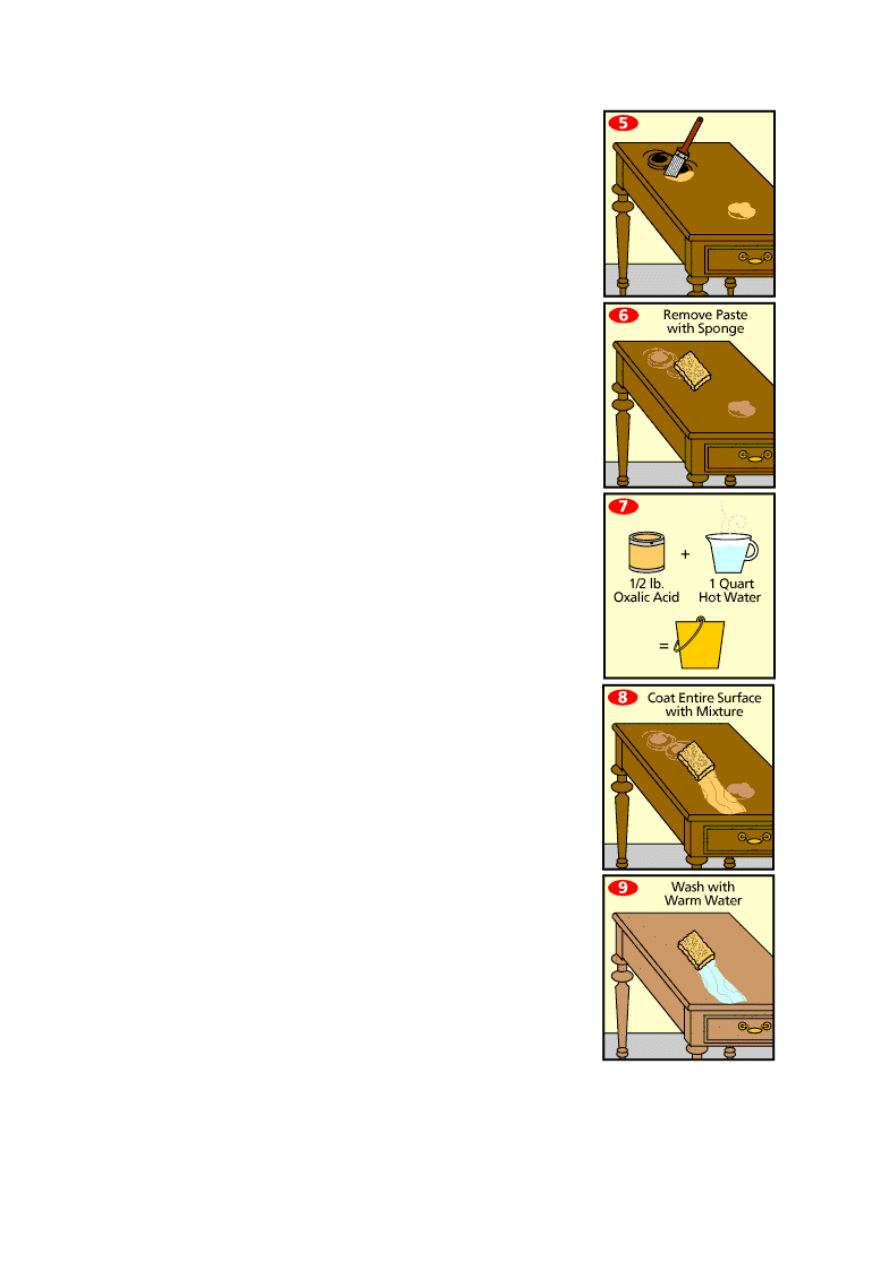
5.
Apply the paste mixture only to the heavily stained areas and black spots
with the tip of a paintbrush or sponge applicator. Avoid contact with metal
fasteners and the metal of the paintbrush, but be sure to avoid breathing
fumes if you do touch any metal hardware. Allow the mixture to “soak” a
few minutes on softwood, such as pine, and up to one hour or more on
hardwoods, such as oak, maple and hickory. Check it often to achieve
your desired color. If the acid crystals dry before the wood is lightened,
remoisten the area with a few drops of water or reapply the paste.
6.
After the stains and spots are bleached, remove the paste with a sponge.
7.
Next, use the larger-size plastic container to mix a wash of water and
oxalic acid. To work a large area, mix ½ lb. oxalic acid crystals to 1 quart
of hot water. For smaller areas, mix 1 oz. of acid crystals to 1 cup of hot
water.
8.
Then coat the entire surface of your furniture piece to remove the stain
finish and achieve an even color. Be sure to get the bleach into the
seams, joints and detail areas.
9.
Once the surface is uniformly bleached, thoroughly wash away the acid
with warm water using a clean sponge and clean water.
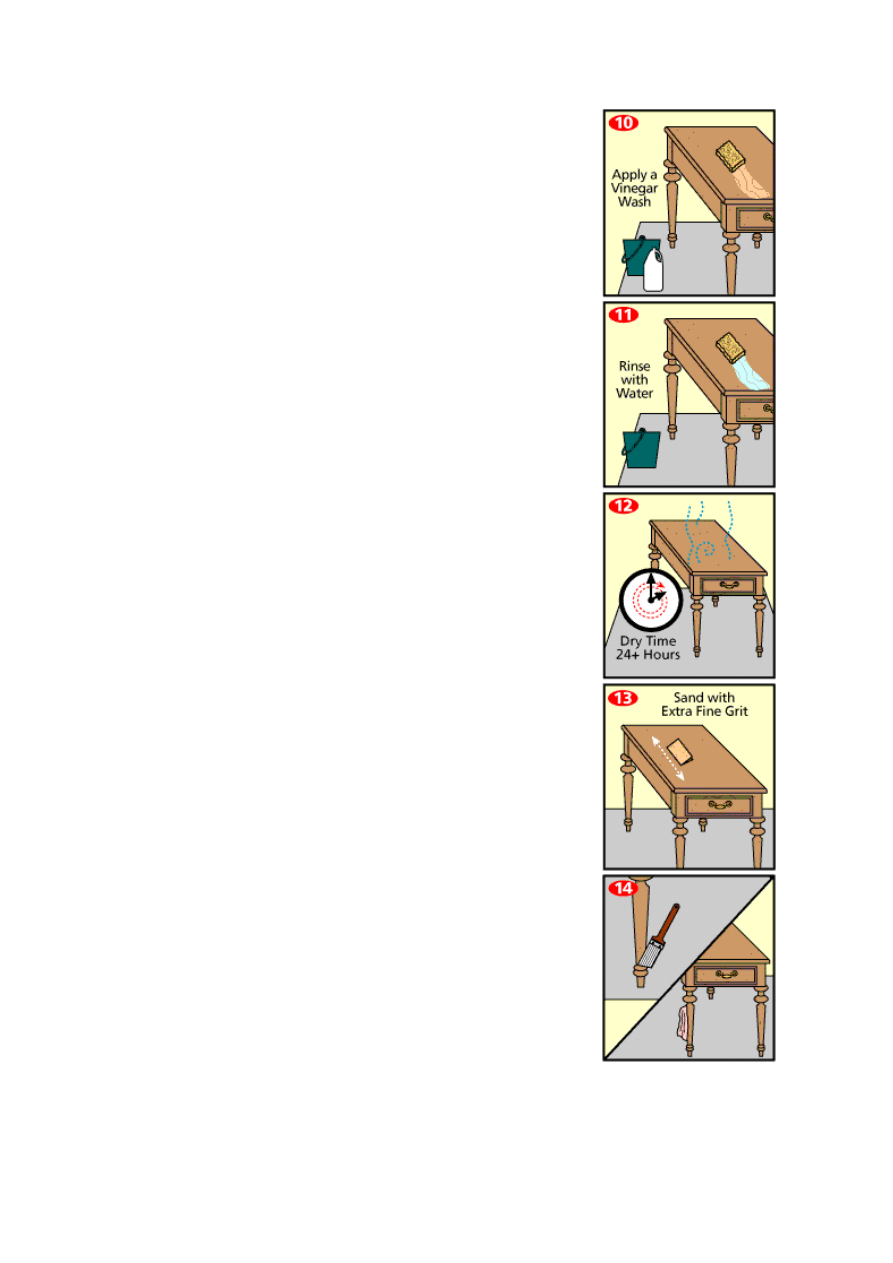
10.
Then neutralize the acid bleach by wiping the wood surface with white
vinegar using a clean sponge. If you don’t neutralize the bleach, it will
lighten any stain you apply later.
11.
Rinse again with clean water and a clean sponge, being sure not to let the
wood sit for too long saturated with water or vinegar.
12.
Allow your furniture piece to dry thoroughly, which will take about two
days.
13.
After the piece is dry, gently sand the surface with extra-fine grit
sandpaper - 280-grit should do.
14.
Use a clean, dry paintbrush to brush off sanding dust, especially in the
joints and detail areas. Then rub a tack cloth over the entire surface of
your furniture. If stains and marks persist, you can repeat the process, or
try one of the other bleaching methods, either mild bleach or a two-part
hydrogen peroxide solution (see our tutorials on these two topics).
SHOPLIST

Materials List
Oxalic Acid Crystals (sold in paint stores and paint departments)
White Vinegar
Plastic Pail of Hot Water
Vinyl or Rubber Gloves
Rags
Plastic Pail of Rinse Water
Dust Mask
2 Sponges
Tack Cloth
Extra Fine (280) Grit Sandpaper
Tools List
Safety Glasses
3 Plastic Mixing Containers (a two-quart capacity and a couple pint size)
Plastic or wood stir stick
Sturdy Drop Cloth
Paintbrush
S
ponge applicators in several sizes including a small tip
Wyszukiwarka
Podobne podstrony:
water parted from the sea
Get Your Ass in the Water & Swim Like Me African American Narrative Poetry from the Oral Tradition
Fuel from Water e book
RADIOACTIVE CONTAMINATED WATER LEAKS UPDATE FROM THE EMBASSY OF SWITZERLAND IN JAPAN SCIENCE AND TEC
Fuel from Water e book
Aspden POWER FROM WATER COLD FUSION PART 1 (1994)
Haendel Suite From Water Music
Fuel From Water Patent
An%20Analysis%20of%20the%20Data%20Obtained%20from%20Ventilat
Biomass Fired Superheater for more Efficient Electr Generation From WasteIncinerationPlants025bm 422
O'Reilly How To Build A FreeBSD STABLE Firewall With IPFILTER From The O'Reilly Anthology
Estimation of Dietary Pb and Cd Intake from Pb and Cd in blood and urine
Popular Mechanics Finding And Fixing Water And Air Leaks
pages from xm 754sx 3
Applying Water Based Interior Finish
1b Water Hygiene Amended EB
Does the number of rescuers affect the survival rate from out-of-hospital cardiac arrests, MEDYCYNA,
więcej podobnych podstron